
Online car buying fraud
hire a lawyer now
Online car buying fraud: Scams, risks and help from a lawyer
Buying a car online offers quick comparison options, a wide selection of vehicles, and convenient contact. At the same time, it's one of the riskiest legal transactions on the internet. Scammers exploit the lack of personal oversight, manipulated vehicle data, and fake identities to financially harm buyers. Every year, buyers lose significant sums because fraudsters deliberately exploit trust, feign professional procedures, and take advantage of legal uncertainties.
Many victims only contact a lawyer after the money has already been transferred or discrepancies arise after the purchase. At precisely these times, a swift and structured approach is crucial. The shipping company scam, the advance payment trap, forged vehicle documents, contract tricks, and fictitious claims for damages are among the most dangerous risks associated with buying a car online.
If you suspect you have been deceived when buying a car online – or have already suffered financial loss – you should be aware of the typical scams and have a legal review conducted to determine what steps are now sensible and possible.
Enforce legal claims in just 3 steps
Simple, convenient & fast – we enforce your rights.
commissioning
Give us your mandate easily and conveniently via online form from home.
1lawsuit & trial
We will take care of all the remaining steps for you. Sit back and relax.
2Success
We will successfully enforce your claim and you can enjoy the success immediately.
3The advance payment trap: When a low price disguises the fraud
The classic advance payment trap is one of the most common forms of fraud in car buying. Buyers find an exceptionally cheap offer and are then asked by the seller to pay a reservation fee or the full purchase price upfront. The seller justifies this with claims of high demand, work commitments, or the need to hold the vehicle for the buyer at short notice. Once the money has been transferred, all contact ceases. Often, the vehicle doesn't exist, was never inspected, and was never intended for sale. An advance payment without a personal handover is one of the clearest warning signs when buying a car online.
Important: Even if it seems hopeless at first, there are legal avenues of recourse in many cases, for example via payment methods, communication histories or the platforms involved.
We will take care of your case – quickly & with commitment.
The shipping company trick: One of the most modern and dangerous scams
The so-called "shipping company scam" is an evolution of the advance payment scam and is being implemented with increasing professionalism. Sellers claim that the vehicle is located abroad or cannot be handed over personally for personal reasons. Instead, it is supposed to be delivered by a sham shipping company. The preceding process includes fake transport orders, fabricated tracking numbers, and deceptively realistic websites designed to create the impression of a reputable logistics firm. Buyers are asked to transfer transport costs or the purchase price to a foreign bank account. The delivery never takes place. This scam is so effective because it creates the illusion of a legitimate process and exploits the geographical distance.
In this particular situation, a swift legal review is crucial to trace payment flows and secure potential recourse options.
Forged vehicle documents: A real vehicle, but a false identity
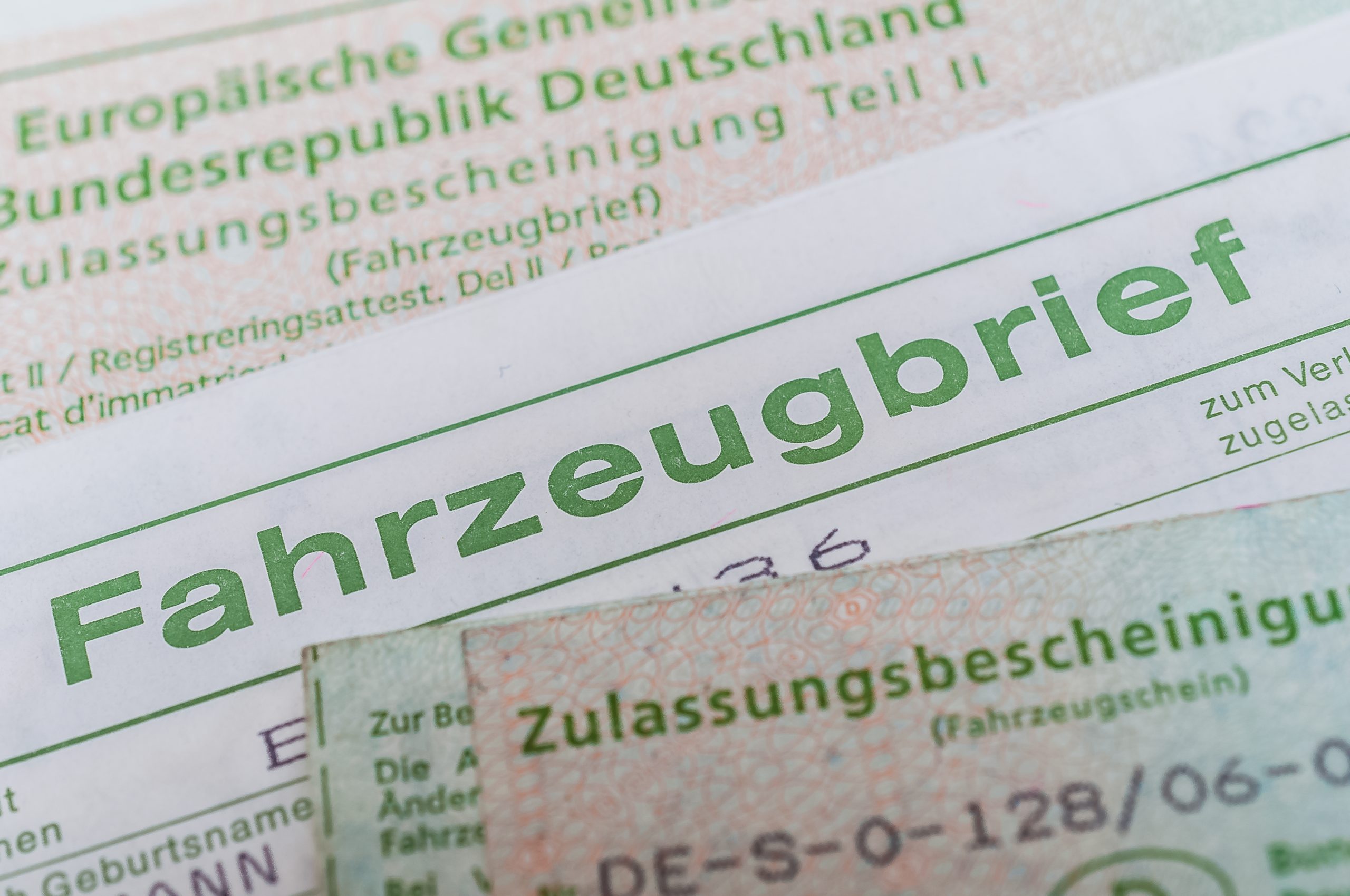
Fraudsters use digital forgeries to present manipulated vehicle registration certificates and forged vehicle titles. Buyers believe they are purchasing a legitimate vehicle, but discover the documents are fake at the latest when registering the vehicle. These vehicles are often stolen or originate from fraudulent activities abroad. Purchase in good faith is legally impossible. In such cases, the buyer loses both the purchase price and the vehicle. Therefore, the authenticity of the documents should always be verified directly at the vehicle registration office in the presence of the seller or with expert assistance.
Here too, the rule applies: the sooner the case is reviewed by a lawyer, the better evidence can be secured and claims prepared.
Contract tricks: When false information distorts the basis of the deal
Classic contract tricks include deliberately providing incomplete, misleading, or manipulated information about the vehicle. Fraudsters conceal accident damage, manipulated odometer readings, technical defects, or the vehicle's previous commercial ownership. Some rely on buyers trusting phrases like "sold as seen" and shying away from later claims. However, from a legal perspective, if a significant defect is intentionally concealed or a false condition is guaranteed, this constitutes fraudulent misrepresentation. The buyer can contest the purchase agreement, demand rescission, and claim damages. Contract tricks are therefore among the most insidious forms of fraud because they can deceive even experienced buyers.
Legally, the situation is clear: Fraudulent misrepresentation invalidates such clauses. Affected parties can contest the contract, demand its reversal, and claim damages.
Fictitious claims for damages: Pressure after purchase
A relatively unknown but increasingly common scam involves fictitious claims for damages. After the purchase is completed, the seller or buyer—depending on the approach—claims that the vehicle has alleged defects that were concealed before the handover. These claims are often supported by fabricated workshop diagnoses, staged damage, or legally inaccurate assertions. The goal is to induce the buyer to make additional payments or to increase the originally agreed-upon price. This form of fraud is not based on a manipulated vehicle, but rather on psychological pressure and the buyer's fear of legal repercussions. Legally, such claims are generally unfounded unless objective evidence exists. Nevertheless, many victims pay out of fear of legal consequences. A legal assessment can quickly clarify the situation.
Why online car buying fraud is so often successful
Online car purchases often take place without any face-to-face interaction. Pictures and descriptions replace real-world inspections. Sellers frequently use fake identities, disposable email addresses, messaging services, and foreign phone numbers. Attempts to prevent viewings or create time pressure are also typical. Buyers rely on the superficial impression of a professional advertisement without being able to verify the actual circumstances. This lack of transparency allows fraudsters to operate systematically.
Why swift action is crucial now
Online car purchase fraud often succeeds because perpetrators operate professionally and victims initially hesitate. However, time is of the essence: payment methods, communication data, and platform traces can only be secured for a limited time. The sooner a lawyer is consulted, the greater the chances of limiting or recovering financial losses.
How you as a buyer can effectively protect yourself in the future
The most important protection is to never make any advance payments. Among the most important safety measures is a personal inspection of the vehicle. A reputable seller will allow you to see identification documents, original registration papers, and verify your identity. Written agreements should be complete, transparent, and verifiable. Other sensible safety tips include: do not accept communication exclusively via messenger services, do not make payments abroad, and do not send documents unencrypted via email. Anyone planning to buy a car online should seek legal advice before signing a contract or transferring any money.
Support from our law firm: Your legal security when buying a car
If you have fallen victim to one of these scams or suspect that a seller or buyer is acting dishonestly, you should take legal action before the damage worsens. Our law firm reviews contracts, communication histories, payment methods, and vehicle data, and supports you in enforcing claims for damages, reversing the purchase, and pursuing criminal charges against the perpetrators. Early intervention significantly increases the chances of minimizing or fully recovering financial losses.

Professional advice & support
We offer you a professional and comprehensive initial consultation regarding car fraud. Take advantage of this opportunity and avoid mistakes.
Frequently asked questions about
Online car buying fraud
Didn't find the right answer?
Write your question to
office@ru.law
or call us:
+49 (0)211 / 819770
We are available for you 24/7.