
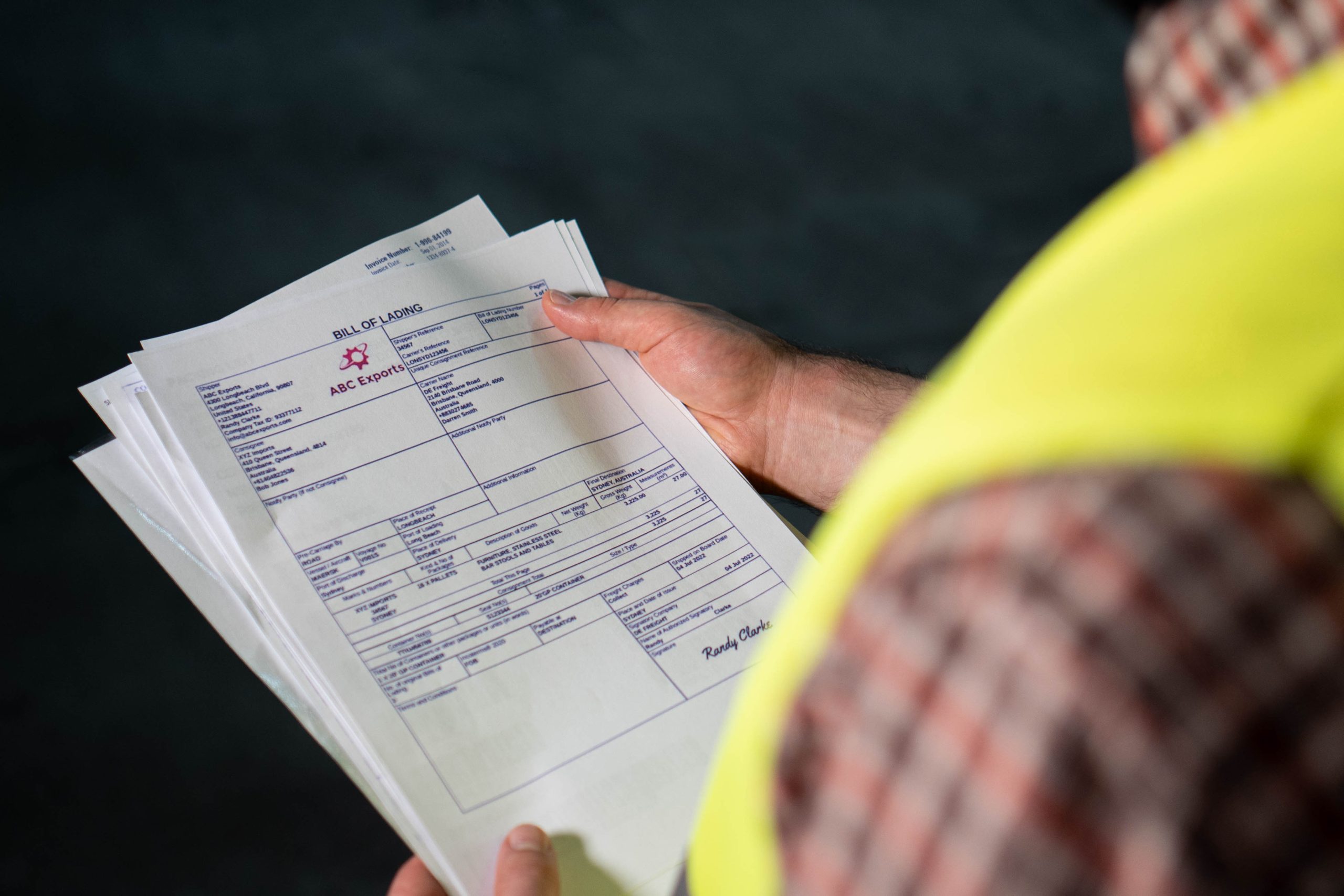
Evidentiary, blocking and tradition function, original and electronic B/L as well as the risks involved in handover in sea freight transport
The bill of lading is the central document in sea freight and far more than just a confirmation of receipt. It serves as proof, a document of title, and a document of title that embodies the goods. Understanding its functions ensures the security of your goods and your payment. Rogert & Ulbrich advises shippers on the drafting and enforcement of bill of lading rights.
What a bill of lading is – and why it is crucial for shippers
The bill of lading, or international document, is issued by the carrier for the goods received or shipped. According to Section 513 of the German Commercial Code (HGB), the shipper can demand the issuance of a bill of lading, in case of doubt as an order bill of lading. It documents the maritime transport contract but also embodies rights to the goods themselves.
For shippers, the bill of lading is therefore a security instrument. It determines who can demand delivery of the goods at the destination and, in documentary transactions, it secures payment. Errors in its issuance or delivery can jeopardize the goods or the purchase price.
An overview of our consulting services transport and forwarding law You can find it on our service page.
Do you ship goods by sea? Have your bills of lading checked to ensure they effectively protect your goods and your payment.
The three functions: proof, blocking document, and traditional document
The special position of the bill of lading results from the interplay of three functions, which are regulated in the German Commercial Code (HGB).
- Evidentiary function: According to Section 517 of the German Commercial Code (HGB), the bill of lading creates a presumption that the carrier has taken possession of the goods as described therein. This effect may be stronger with respect to a bona fide third party.
- Blocking and authentication function: According to Sections 519 and 521 of the German Commercial Code (HGB), only the person entitled under the bill of lading can demand delivery, and the carrier may only deliver against return of the bill of lading.
- Traditional function: According to § 524 HGB, the issuance of the bill of lading to the named recipient has the same effect for the acquisition of rights to the goods as the delivery of the goods, provided that the carrier possesses the goods.
This interplay makes the bill of lading the key to goods and payment. Whoever holds the document controls access to the goods. That's precisely why careful handling of the original is so important.
Unsure what rights your bill of lading embodies? Have its functions and protection reviewed on a case-by-case basis.
Types of bill of lading: Order, name and bearer
Bills of lading differ in who is designated as the holder and how the document can be transferred. This classification determines the tradability of the goods during transport.
- Order bill of lading: It is addressed to the order of a person and is transferred by endorsement. It is the most common and flexible form in practice and is provided for in cases of doubt.
- Bill of lading (named or direct): It names a specific recipient and is only transferable according to the rules of assignment of receivables. It is less flexible, but more clearly defined.
- Bearer bill of lading: It does not identify a named authorized party, meaning that the current holder is authorized. This form is rare in everyday use and carries a higher risk of misuse.
The choice of bill of lading type has direct consequences for security and negotiability. Anyone working in documentary business should consciously determine the form. An unsuitable choice can compromise the security.
Unsure which type of bill of lading suits your business? Let us adapt the design to your delivery and payment structure.
Original, electronic bill of lading and sea waybill compared
In practice, shippers encounter various document formats that differ significantly in their legal effect. The choice determines whether the security function is maintained.
- Original bill of lading: It is often issued in a set of several copies and has full legal and traditional effect. Each copy must be carefully preserved.
- Electronic bill of lading: According to Section 516 Paragraph 2 of the German Commercial Code (HGB), an electronic record is equivalent to a bill of lading if it fulfills the same functions and authenticity and integrity are maintained. This requires a recognized system.
- Bill of lading: The sea waybill according to § 526 HGB is neither a document of title nor a blocking document. It speeds up delivery but relinquishes the security function of the bill of lading.
Those who opt for a sea waybill or similar release due to time constraints forgo essential protection. This can be sensible if trust and payment are assured, but otherwise carries significant risks. A separate article on Telex Release and Express Bill of Lading will address the specific issues surrounding early release.
Are you considering a sea waybill or an electronic solution? Have it checked whether your insurance coverage remains intact.
Typical pitfalls during the handover
Most disputes arise not during the exhibition, but during the handover and delivery. We see the following scenarios particularly frequently:
- Delivery without presentation of the original: If the carrier delivers without returning the bill of lading, he violates Section 521 of the German Commercial Code (HGB) and is liable. The shipper's security function is simultaneously forfeited.
- Loss of a copy: If an original document from the set is lost, disputes and delays are likely because delivery is tied to the original.
- Incorrect or impure information: The carrier is liable for incorrect bill of lading information according to § 523 of the German Commercial Code (HGB). Notes regarding the condition of the goods, so-called impure bills of lading, can jeopardize the tradability and payment under the letter of credit.
- Early release: A release via telex release or sea waybill lifts the blocking effect and can lead to the total loss of the security if payment is not received.
Especially when used in conjunction with a letter of credit, an error in the bill of lading can invalidate the entire payment security. Therefore, the issuance, verification, and delivery of the documents should be carefully managed. Those who understand the risks can mitigate them contractually.
Is delivery threatened without presentation of the original document? Have your claims against the carrier checked and secured immediately.
How to protect yourself as a shipper – a guide to action
The typical risks associated with a bill of lading can be managed by following a few basic rules. The following checklist will help:
- Choose the type of bill of lading deliberately: Determine whether an order, named or bearer bill of lading suits your delivery and payment structure.
- Check the information carefully: Check the quantity, condition, and description of the goods to avoid incorrect or inaccurate information.
- Keep originals safe: Treat each copy like a security and document its whereabouts.
- Critically review approvals: Only use a bill of lading or telex release if payment and trust are assured.
- Coordinate documentary business: Align the bill of lading with the requirements of any letter of credit to avoid payment defaults.
By heeding these points, you can avoid the most common and costly mistakes in sea freight. We support you in preparing the documents and enforcing claims arising from the bill of lading. The clearer the documentation chain, the more secure the goods and payment.
Do you want to ensure your bill of lading processes are legally compliant? Have your documents and contracts reviewed.
Rogert & Ulbrich – Your lawyers in transport and maritime law
Rogert & Ulbrich advises shippers, importers, and freight agents on all matters relating to bills of lading and sea freight. The lawyers Dr. Marco Rogert and Tobias Ulbrich and their multilingual team are familiar with the functions of the bill of lading and the practices of major shipping companies from their daily work.
We design bills of lading and document workflows, check for incorrect or inaccurate information, and enforce claims arising from the bill of lading, for example, in cases of delivery without presentation of the original. Through our Dutch Desk and as Transport law attorney in Rotterdam We also accompany traffic through the Dutch ports.
Whether it's design issues, incorrect information, or extradition disputes: Arrange a initial consultation and secure your goods and your payment.