
Building insurance – if the insurer does not settle the building damage claim
hire a lawyer now
If the building is damaged, the economic existence of the community is often at stake.
A fire, a storm, a burst pipe, or a flood can severely damage or even partially destroy a building. For owners, such an event not only means organizational effort but often a massive financial burden. That's precisely what building insurance, or homeowner's insurance, is for.
In practice, however, it turns out that insurers don't always settle claims without difficulty. Causes are questioned, breaches of duty are alleged, or benefits are reduced due to alleged underinsurance. Disputes often arise as to whether the specific damage is even covered by insurance.
Rogert & Ulbrich represent policyholders nationwide in insurance law and support the enforcement of claims arising from building insurance – out of court and in court.
Enforce legal claims in just 3 steps
Simple, convenient & fast – we enforce your rights.
commissioning
Give us your mandate easily and conveniently via online form from home.
1lawsuit & trial
We will take care of all the remaining steps for you. Sit back and relax.
2Success
We will successfully enforce your claim and you can enjoy the success immediately.
3When does insurance coverage apply under a residential building insurance policy?
Whether damage is covered by homeowner's insurance depends on the specific circumstances. Insurance contract and the agreed terms and conditions. In some cases, an all-risks insurance policy is agreed upon, which generally covers any unforeseen damage unless explicitly excluded. However, contracts that only cover specific risks are more common.
Building insurance typically covers damage caused by fire, lightning, water leaks, storms, and hail. Whether additional natural hazards such as flooding or subsidence are covered depends on the agreed-upon insurance policy.
In the event of a dispute, the policyholder generally bears the burden of proof to demonstrate that an insured event has occurred. Especially in cases of complex damage, the legal classification is crucial.
We will take care of your case – quickly & with commitment.
Fire, lightning strike and power surge
An insured fire occurs when a fire originates outside of its intended source or spreads beyond it on its own. Not every fire automatically constitutes an insured loss. The decisive factor is whether the conditions of the insurance policy are met.
Lightning strikes can also be insured if the lightning directly impacts the building or if consequential damage results. Damage from power surges is sometimes explicitly included or excluded. This depends largely on the specific terms of the policy.
In cases of fire, insurers also regularly investigate whether gross negligence or even deliberate causation of the damage is involved. Such allegations must be thoroughly examined from a legal perspective, as they can have far-reaching consequences for insurance coverage.
If your insurance company is causing problems – talk to lawyer Dario Kovac
Is your insurance company refusing to pay or delaying the settlement? Lawyer Dario Kovac He has been assisting clients with disputes with insurance companies, particularly legal expenses insurers, since 2019. His previous work at ARAG He is familiar with typical rejection strategies from practice.
- Review of your benefit claim
- Consistent enforcement
- No communication with the insurance company
Have your case reviewed now and get in touch directly!

Storm, hail and natural disasters
Storms and hail are among the classic risks covered by building insurance. A storm is generally defined as occurring at wind force 8 or higher. However, the insurer can be exonerated if they can prove that the damage was not caused by a storm.
Natural hazards such as flooding, backflow, subsidence, or landslides are often only covered by a separate agreement. Particularly in the case of flood damage, it is crucial whether there was a significant accumulation of surface water on the property. Without such flooding, insurance coverage is often denied.
Especially during heavy rainfall events, questions often arise regarding the distinction between tap water, backflow, and flooding. This differentiation is of considerable importance in insurance law.
Water damage – frequent areas of conflict
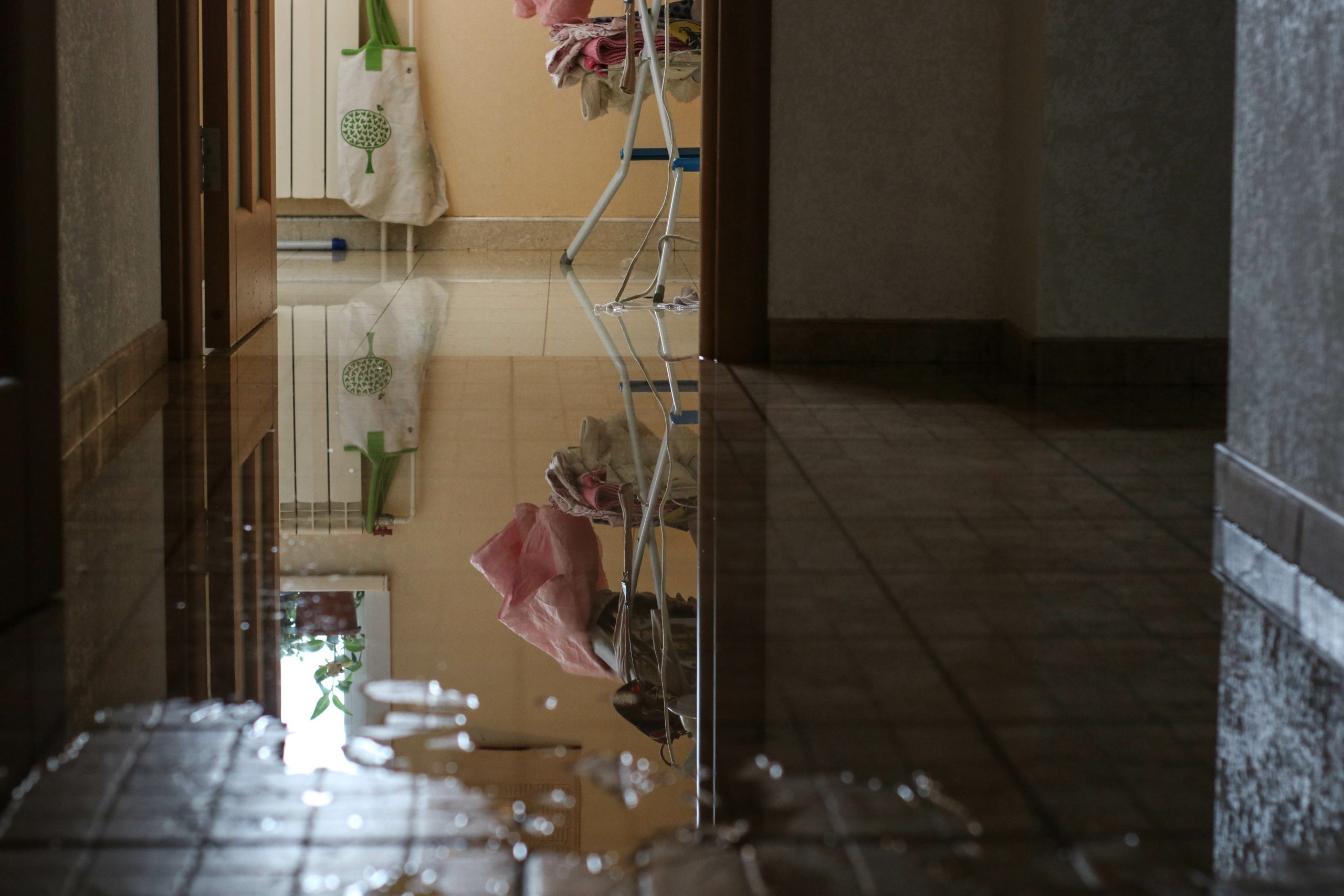
Water damage is covered by insurance if it escapes from supply or drainage pipes or related installations in a manner contrary to their intended use and causes damage to the building. Disputes often arise as to whether the escaping water actually originates from an insured pipe system.
Not every instance of leaking water automatically constitutes an insured water damage claim. Rainwater entering from outside or water from drainage systems may be excluded from insurance coverage.
Furthermore, policyholders are obligated to report a burst pipe immediately. Delays can lead to problems with proof. This also demonstrates how important early legal support can be.
New value, current value and the so-called new value peak
A key issue in building insurance is the question of which value is replaced. While the current value reflects the present value taking age and wear and tear into account, replacement cost insurance generally allows for restoration to the same type and quality.
However, entitlement to the so-called replacement value supplement regularly requires that the restoration is guaranteed. Disputes frequently arise between policyholders and insurers regarding this point, particularly if the reconstruction is delayed or is to be carried out in a modified form.
Without payment of the replacement value portion, a complete renovation is often hardly economically feasible. Therefore, a legal review of the restoration clause is of central importance.
Obligations, underinsurance and exclusions
Insurance contracts regularly contain obligations, i.e., duties of conduct on the part of the policyholder. These include, for example, notification and cooperation obligations, or special care requirements for vacant buildings. A breach of these obligations can lead to reductions in benefits.
Underinsurance is also a frequent point of contention. If the sum insured is less than the actual value of the property, the insurer can reduce the payout proportionally. This often leads to calculation problems, especially with older contracts that reference the value in 1914.
Contractual exclusions must comply with legal requirements. Test It's important to be cautious. Not every clause is legally valid. A careful review of the terms and conditions can be crucial in individual cases.
Practical examples from building insurance
In one case, a claim was made for significant roof damage following a severe storm. The insurer argued that the damage was due to age-related wear and tear and not the storm. However, after obtaining an expert opinion, it was proven that the storm forces were the cause of the damage. The building insurance company ultimately settled the claim in full.
In another case, the insurer refused to pay out the replacement value portion after fire damage, claiming that the restoration was not sufficiently secured. By submitting specific construction contracts and proof of financing, it was demonstrated that the requirements were met. The policyholder subsequently received the replacement value portion.
These cases demonstrate that a precise legal and factual analysis is crucial in each individual case.
Experience in insurance law – nationwide representation by our law firm
Rogert & Ulbrich are in Insurance law We are active and represent policyholders nationwide in disputes with insurers. Our firm has experience in complex claims cases related to residential building insurance.
We analyze the claim systematically, review contract clauses, and develop a clear strategy to enforce your claims. Representation takes place out of court or – if necessary – in court proceedings.
10 Questions & Answers about Building Insurance
Have the building damage legally assessed now
If your building insurance company refuses to settle a claim, reduces benefits, or invokes exclusions, you should not accept the decision without review. Especially in cases of substantial damage, a sound legal assessment is crucial.
Have your case reviewed by an insurance lawyer to clarify what claims you are entitled to under your building insurance policy. Arrange an initial consultation and gain clarity about your next steps.

Professional advice & support
We offer you a professional and comprehensive initial consultation in the field of insurance law. Take advantage of this opportunity and avoid mistakes.