
Manufacturers and authorities must release sensitive files.
In the diesel emissions scandal Those responsible are practicing secrecy: documents on software manipulation are considered trade secrets, responsibilities remain vague, official measurement and test results are kept under wraps - and not just by the car manufacturers, but also by the Federal Motor Transport Authority (KBA) and the Federal Ministry of Justice. But the courts have long given the public's interest in clearing up the scandal more importance than the manufacturers' trade secrets. Car companies and state institutions are increasingly being ordered to hand over documents. Is the whole truth finally coming to light?
When it comes to complaints from injured diesel buyers in the emissions scandal In order to brush off the accusations, car manufacturers like to accuse the plaintiffs of arguing “out of the blue”. However, if you ask the manufacturers how exactly their switch-off devices work and why they are necessary, the companies react very tightly, citing trade secrets, claiming to know nothing or – as for example Daimler before the Heilbronn Regional Court or in proceedings before the Higher Regional Court of Stuttgart – predominantly blacked out pages.
Secondary burden of proof: Car manufacturers must provide facts
Judges have long criticized the insufficiently substantiated statements of the car companies and point to the secondary burden of presentation and proof the manufacturer. This means that in proceedings in the emissions scandal, the diesel buyers who are suing cannot explain details of the engine control and software manipulation in detail because they do not have access to the relevant information. In this case, the secondary burden of explanation and proof falls on the defendant, i.e. the car manufacturers. They have detailed information on defeat devices and are obliged to answer open questions and substantively dispute the plaintiffs' statements by presenting facts that prove the opposite. Concrete facts, in other words, instead of nebulous claims: this is what the Federal Court of Justice recently demanded in its ruling in the proceedings against VW.
Car companies, KBA and Ministry of Transport: a wall of silence
The disclosure of technical details and the release of documents on shutdown devices, decision-making processes and responsibilities are opposed not only by Volkswagen, Daimler & Co. The KBA and the Federal Ministry of Transport are also trying to keep sensitive documents and test results under wraps. It is thanks to persistent journalists, environmentalists and courageous lawyers that they can no longer get away with this secrecy. This is shown by numerous court rulings from recent months, for example from Schleswig, Berlin and Leipzig.
Public has a right to information in the emissions scandal
The ZDF political magazine Frontal 21 has been reporting continuously on the diesel emissions scandal since 2015. In the course of the research, the editorial team asked VW and the KBA to inspect documents on software updates for the EA 189 scandal engine. The content of the approximately 4,000 pages is explosive. They may contain evidence that illegal switch-off devices are still effective in the 2.0-liter diesel engines of the VW Amarok, Audi A4, Audi A5, Audi Q5 and Seat Exeo, even after software updates.
VW and KBA refused to provide access to the files on the grounds that the documents contained trade and business secrets and would jeopardise “fair proceedings” in parallel proceedings. The Schleswig-Holstein Administrative Court had already ordered the KBA to release the documents in April 2019. sentenced (April 22, 2019, ref. 6 A 222/16). Almost exactly one year later, the Schleswig-Holstein Higher Administrative Court rejected the KBA's appeal (April 27, 2020, ref. 4 LA 251/19). The first instance judgment is now final. The KBA must grant Frontal 21-Reaktion access to the files.
The reasoning of the Higher Administrative Court leaves nothing to be desired in terms of clarity: Given that 2.5 million car buyers were affected by the emissions scandal, the public interest in the publication of the documents is to be valued higher than VW's interest in the confidentiality of operational and business secrets.
Deutsche Umwelthilfe: Access to files after the third instance
Without a court order, neither car manufacturers nor state institutions comply with their duty to provide information as set out in Section 3 Paragraph 1 and Section 2 Paragraph 1 of the Environmental Information Act (UIG). This is demonstrated by the “Frontal 21 case” as well as a Proceedings of the German Environmental Aid (DUH) against the Federal Ministry of Transport, which also shows how close the relationship is between VW and the ministry.
Since 2015, the environmental organisation has been requesting access to the files of the “Volkswagen Investigation Commission”, which was set up by former Transport Minister Alexander Dobrindt. The ministry refused, the DUH sued for access to the files and won the case before the Berlin Administrative Court (30.11.2017, Az. VG 2 K 288.16) as well as the appeal before the Berlin-Brandenburg Higher Administrative Court (29.03.2019, Az. OVG 12 B 13.18 u. 14.18). The appeal against the Higher Administrative Court’s ruling has been rejected by the Federal Administrative Court in Leipzig not admitted (April 22, 2020; Ref. BVerwG 10 B 18.19). The judgment is now legally binding - and after more than 4 years of legal disputes, the Federal Ministry must finally release the files to the DUH.
In this case too, all courts valued the public's interest in clarifying the emissions scandal more highly than VW's operational and business secrets. In another case, the DUH is demanding access to a document from Volkswagen AG in which the company admitted to the Federal Ministry of Transport in November 2015 that it had false CO2 values for 800,000 cars and explained in more detail how this had come about. The decision is still pending here.
In another case, Deutsche Umwelthilfe obtained a ruling from the Schleswig-Holstein Administrative Court in 2018 that forces the KBA to release documents relating to the recall of VW diesel vehicles (April 20, 2018, case number 6 A 48/16).

"It is a scandal within a scandal how even state institutions such as the KBA and the Ministry of Transport refuse to fulfill their duty to provide information and cover up the deceptive maneuvers of the car manufacturers. We therefore welcome the rulings of the Schleswig-Holstein Higher Administrative Court and the Federal Administrative Court all the more. This is the only way the facts will finally come to light. The decisions from Leipzig and Schleswig will have wider ramifications. Daimler will also no longer be able to get out of the affair with blacked-out documents."
Partner Dr. Marco Rogert
You might also be interested in:
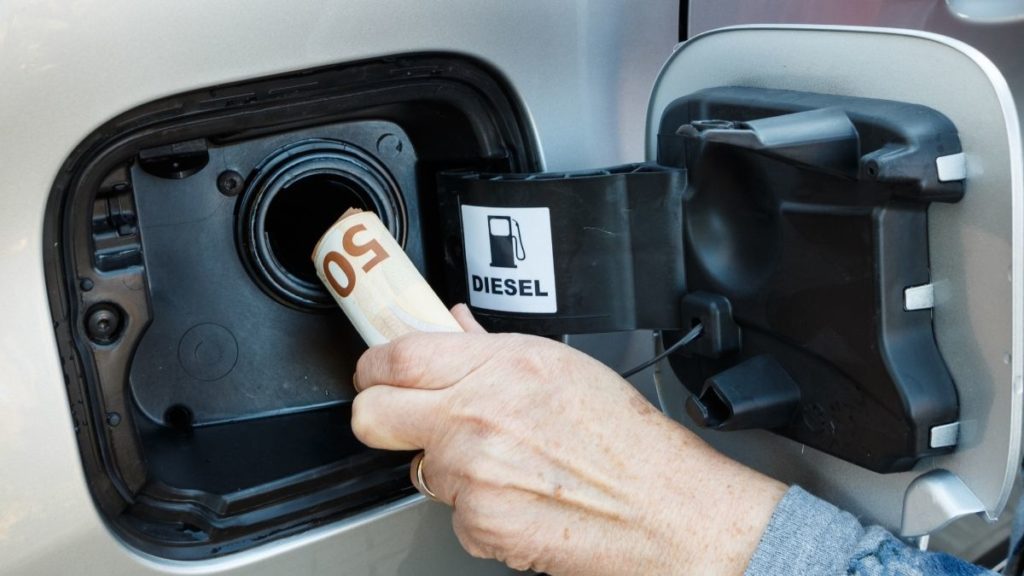
Record prices for diesel - Now is the time to reverse your car
Diesel is at a record high in Germany and petrol is also approaching a…

VTDI emissions scandal involving VW, Audi and Porsche
For many German car manufacturers, the diesel emissions scandal is still omnipresent, including the VW Group…

Audi AG ordered to take back a Porsche Cayenne S
Audi AG was ordered by the Cologne Higher Regional Court to take back a Porsche Cayenne S 4.2l….