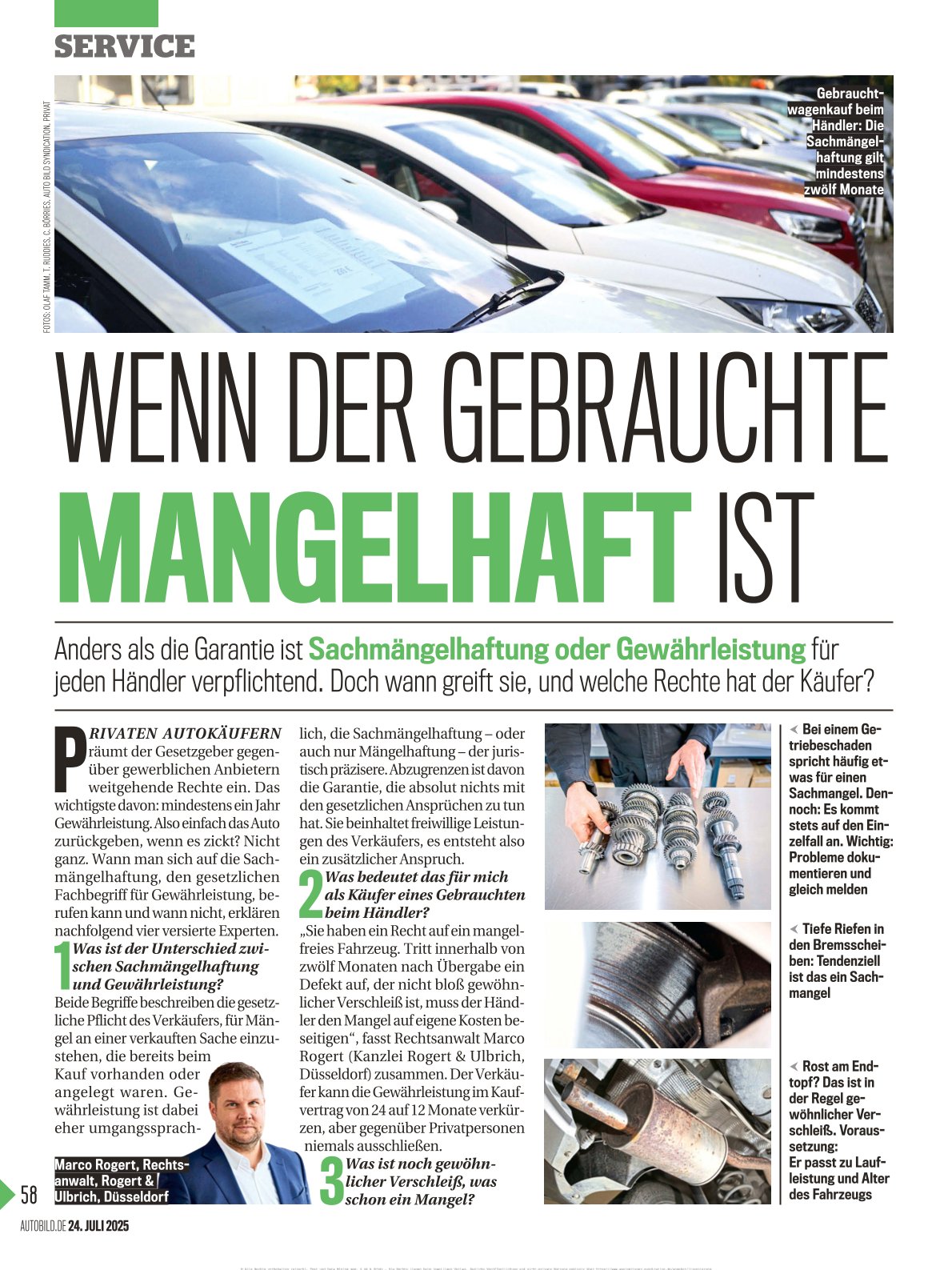

Anyone who purchases a used car from a dealer as a private individual benefits from statutory rights – in particular, liability for material defects. This obligates the seller to be liable for defects that already existed or were at least present at the time of handover. Colloquially, this is often referred to as a warranty. This cannot be excluded for private customers, but can be reduced to twelve months.
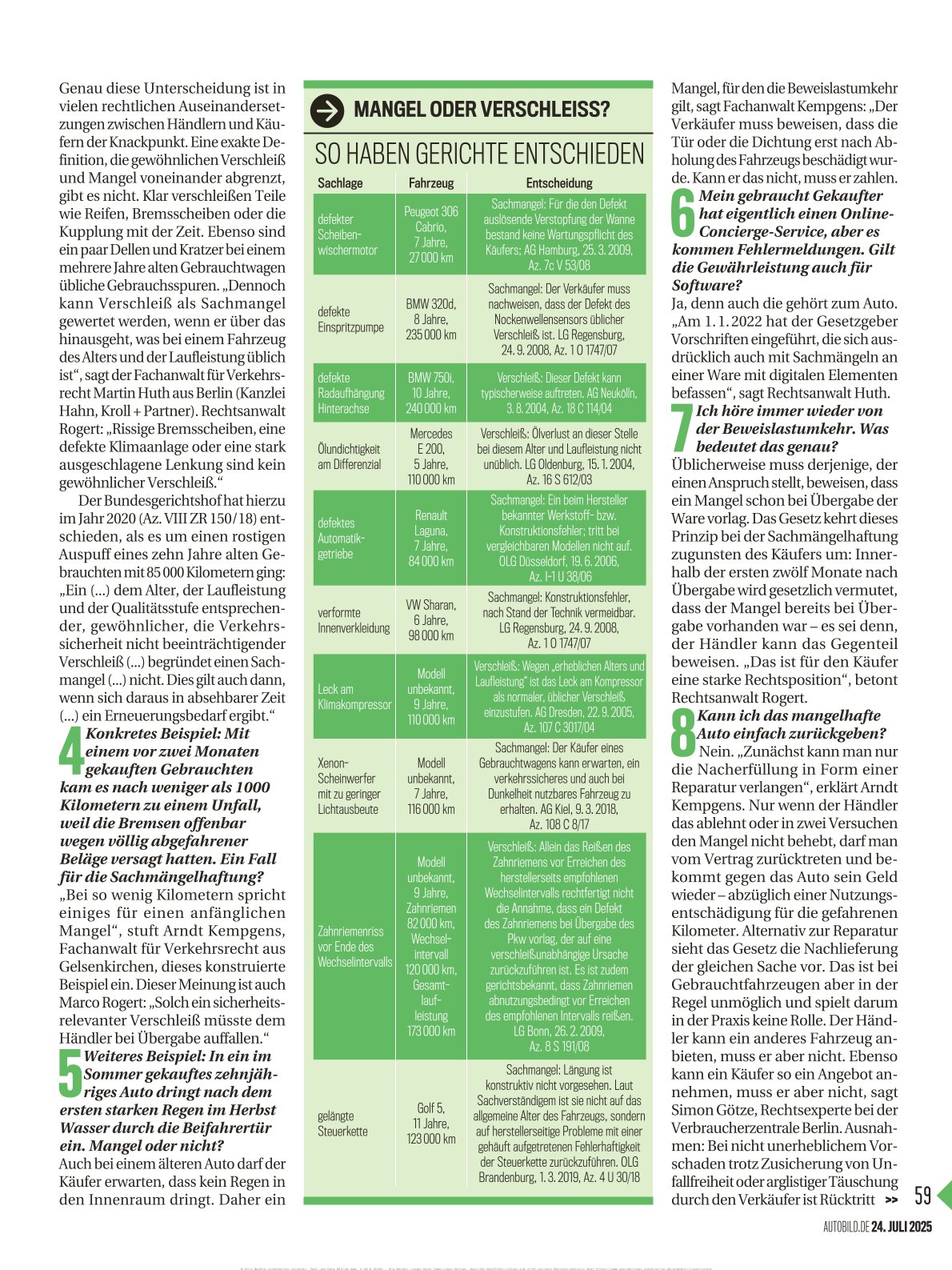
If a defect occurs within this period that goes beyond normal wear and tear, the dealer must repair it at their own expense. However, what constitutes wear and tear is often controversial. While worn tires or minor scratches are considered normal, safety-related defects such as faulty brakes or a leaky door can certainly be considered material defects. In such cases, the statutory burden of proof shifts: It is presumed that the defect was already present upon delivery – the dealer must prove otherwise.
Returning the car immediately is usually not possible. The dealer must first be given the opportunity to repair the defect. Only if the dealer fails to remedy the defect or attempts to repair it fail twice can you withdraw from the purchase contract—possibly subject to a deduction of compensation for use.
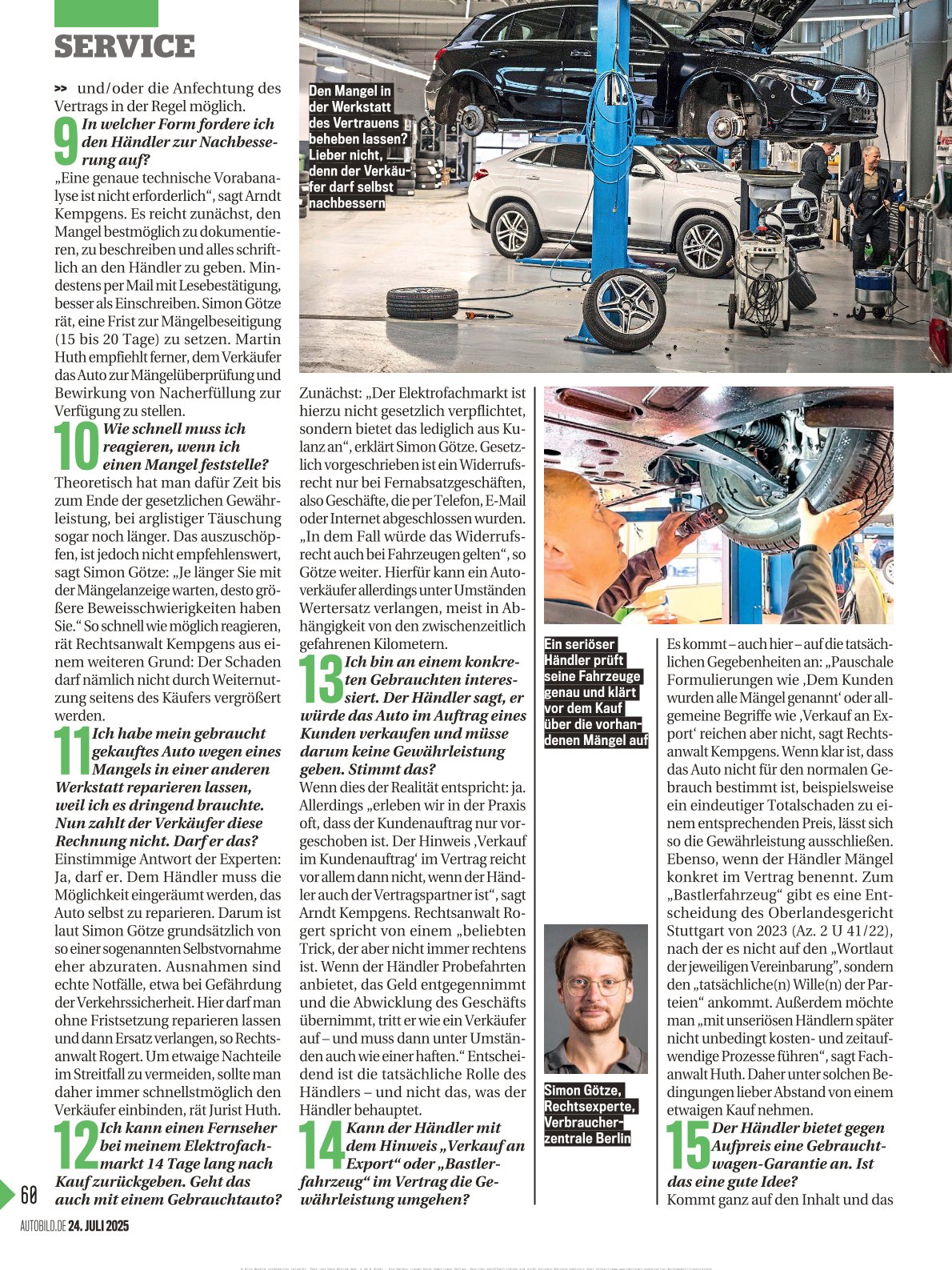
Defects should be reported and documented in writing as early as possible. Those who repair the vehicle themselves without consulting a dealer usually end up having to bear the costs themselves. An exception can only be made in emergencies—for example, if road safety is at risk.
Even if a dealer claims to be selling on behalf of a customer, they are often still a contractual partner – for example, if they organize test drives or accept payments. In such cases, they are fully liable. Terms such as "export vehicle" or "hobby car" only effectively nullify liability for material defects if the condition and use are clearly established.
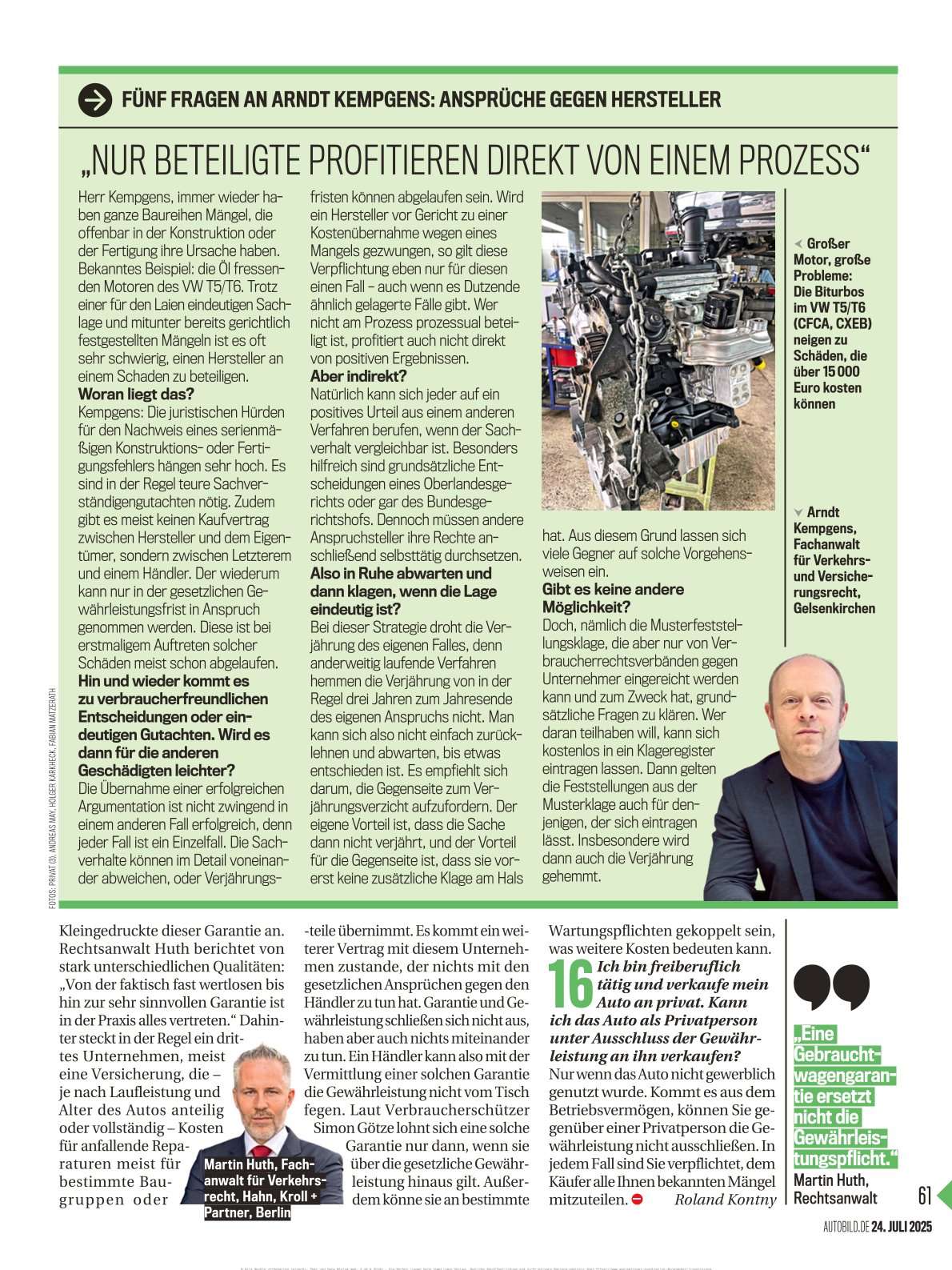
An additional used car warranty can be useful, but should be carefully reviewed. It does not replace the statutory warranty and is often tied to conditions such as regular maintenance.
Anyone selling a vehicle themselves can exclude liability as a private individual – but only if the vehicle is not part of the company's assets. In any case, known defects must be disclosed.
Conclusion: If you know your rights and report defects correctly, you'll be well protected when buying a used car. If in doubt, it's worth seeking legal advice to avoid unpleasant surprises.
See the full article in Auto Bild here: