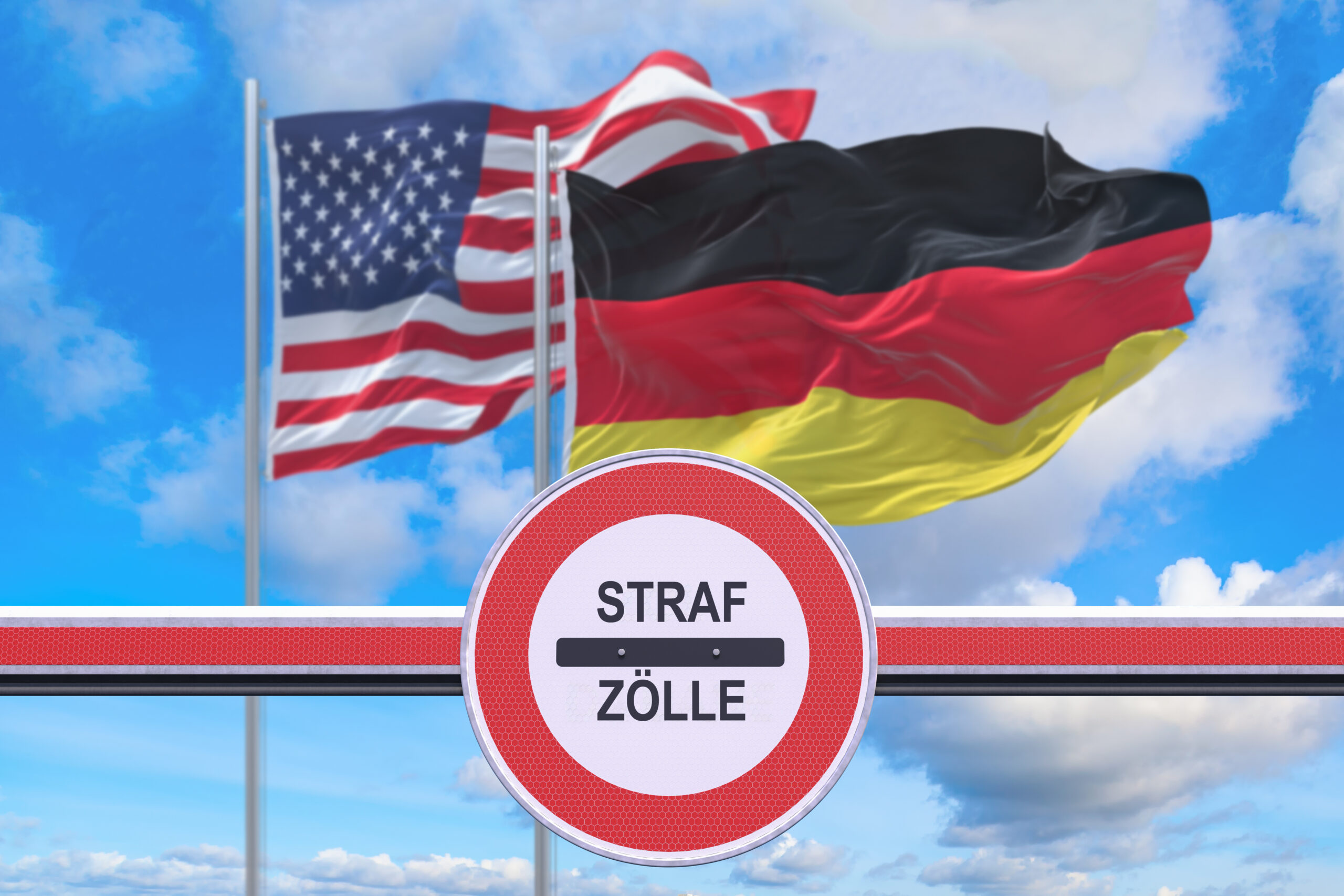

In its ruling of November 21, 2024, the European Court of Justice (ECJ) clarified a key question of customs law: Under what circumstances does processing outside the EU constitute so-called circumvention processing – with the consequence that anti-dumping measures still apply? This is particularly relevant for internationally operating companies, as punitive tariffs can be levied if circumvention processing is assumed to have occurred despite the relocation of production.
When does circumvention processing occur?
Circumvention processing occurs when processing or working in a third country is deliberately carried out to circumvent trade protection measures, such as punitive tariffs. Article 33 of the Delegated Regulation to the Union Customs Code (UCC-DA) is relevant in this regard, providing the benchmark for determining whether processing is to be considered economically unjustified.
The ECJ clarified that the decisive factor is whether the main purpose of the relocation of production is to circumvent such measures. Even if other economic reasons exist, a predominant intention to circumvent them is sufficient to meet the requirements of Article 33 of the UCC-DA.
Impact on customs origin
If circumvention is detected, the affected product loses its "new" origin. It continues to be assigned to the country of origin of the raw materials for customs purposes. In this specific case, this means that even if production has been relocated to a third country such as Thailand, the goods are still considered to have originated in the original export country – in this case, the USA. Consequently, EU punitive tariffs remain applicable to US products.
Evidence: Companies have a duty
While the customs authorities generally bear the burden of proof for the existence of circumvention processing, the ECJ clarified that the company concerned is obligated to provide all relevant information that contradicts such an assumption. The reasoning is that the company is in a better position to disclose the relevant reasons for the decision to relocate.
It is also legally significant that only the reasons existing at the time of the relocation are taken into account. Subsequent economic justifications are disregarded.
Independence of Art. 33 UZK-DA confirmed
In its decision, the ECJ also reaffirmed the autonomy of Article 33 of the UCC-DA. This provision should be viewed independently of the anti-circumvention provisions of the Basic Anti-Dumping Regulation (Regulation (EU) 2016/1036). Article 33 is not a mere implementation of that provision, but rather represents an autonomous provision.
The court also rejected the objection that Article 33 UCC-DA exceeds the delegation framework of Article 62 UCC. Rather, it constitutes a permissible and appropriate interpretation of the concept of "economically justified processing" in Article 60(2) UCC within the framework of Article 290 TFEU.
Unresolved questions regarding proof of origin
However, the question of how the origin of goods is to be determined in the case of circumvention remains unanswered. While Article 33 of the UCC-DA focuses on the country of origin of the input materials, Article 60 (2) of the UCC defines origin based on the last economically justified processing or working. Whether and how these two approaches are compatible may still need to be clarified in future proceedings.