Termination at Mercedes Benz in Stuttgart – Your rights as an affected party
hire a lawyer now
What Mercedes-Benz employees in Stuttgart, Untertürkheim and Sindelfingen now need to know legally
Mercedes-Benz is cutting up to 20,000 jobs by 2027 – and at its headquarters in Stuttgart, no less. Anyone in Untertürkheim, Sindelfingen, or another location in the region who has received a severance offer or is feeling internal pressure to leave the company should know: signing is not mandatory. Rogert & Ulbrich advises Mercedes-Benz employees in the greater Stuttgart area on reviewing termination agreements, negotiating better terms, and on all matters relating to the severance program.
Enforce legal claims in just 3 steps
Simple, convenient & fast – we enforce your rights.
commissioning
Give us your mandate easily and conveniently via online form from home.
1lawsuit & trial
We will take care of all the remaining steps for you. Sit back and relax.
2Success
We will successfully enforce your claim and you can enjoy the success immediately.
3What's currently happening at Mercedes-Benz in Stuttgart and the region
Mercedes-Benz Group AG – formerly Daimler AG – is headquartered in Stuttgart and is by far the largest private employer in the region. Tens of thousands of people are employed at its Stuttgart-Untertürkheim and Sindelfingen locations, as well as at other plants in the greater Stuttgart area, including Bad Cannstatt and Möglingen. These very locations are at the heart of the current job cuts.
Since 2024, Mercedes-Benz has been pursuing a comprehensive cost-cutting program with the goal of saving around five billion euros per year by 2027. Up to 20,000 jobs are to be cut in Germany, primarily in indirect areas such as administration, development, and engineering – precisely those areas that are particularly well-represented in Stuttgart and Sindelfingen. The severance program started in April 2025 and was originally scheduled to run until the end of March 2026.
The special feature: Around 91,000 employees covered by collective bargaining agreements in Germany are protected from redundancies until the end of 2034 by a company agreement. For employees at the Stuttgart locations, this means that Mercedes-Benz cannot unilaterally terminate employment but must rely on voluntary departures. This gives them a stronger negotiating position than many initially assume.
Have you received a severance offer or are you feeling internal pressure to leave? Have the situation reviewed before making a decision.
We will take care of your case – quickly & with commitment.
The termination agreement: What you give up – and what is negotiable
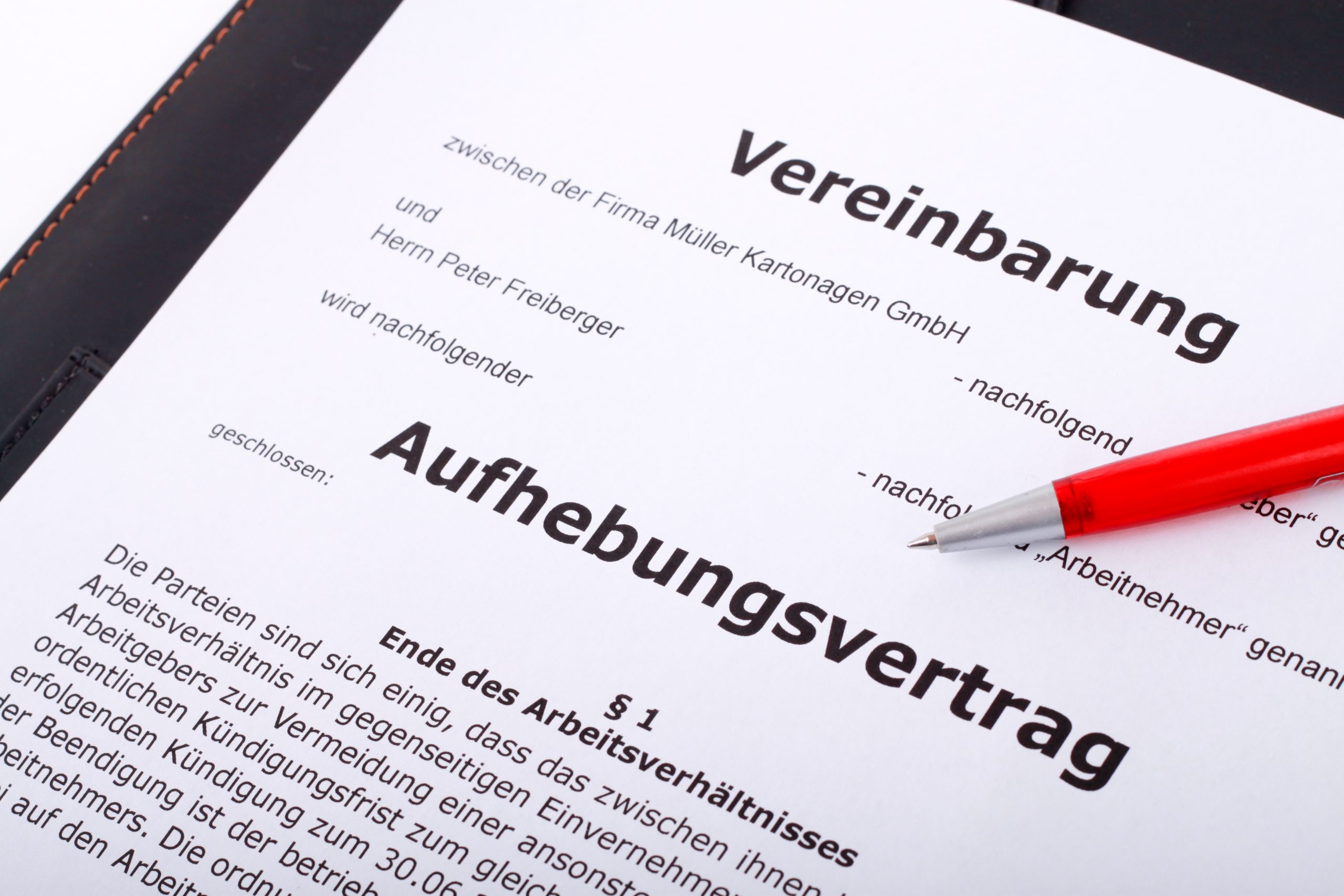
Mercedes-Benz is opting for termination agreements instead of dismissals. This is convenient for the company: no unfair dismissal proceedings, no risk of invalidity. For you as an employee at a Stuttgart location, a termination agreement means specifically: you end your employment relationship by mutual consent and thereby waive all legal protections that the law provides in the case of dismissal.
This includes, in particular: the right to continued employment, the right to file a claim for protection against unfair dismissal, and potentially a portion of the entitlement to unemployment benefits – if the Stuttgart Employment Agency imposes a waiting period. Whether a waiting period is likely depends on the circumstances, but can be estimated in advance.
At the same time, a termination agreement isn't a form you can simply accept or reject. It's a contractual offer that can be negotiated – regarding the amount of severance pay, the termination date, garden leave, references, and potential non-compete clauses. What Mercedes-Benz initially offers is not necessarily the maximum.
Received a termination agreement? Don't sign anything before you know what your options are.
Severance pay amount: What is realistic for employees in Stuttgart
Mercedes-Benz is paying out very high sums in individual cases as part of its current severance program. For long-serving employees at Stuttgart locations – such as in Untertürkheim or Sindelfingen with extended service and higher salaries – six-figure sums are not uncommon. The specific figures depend on length of service, age, salary level, and the date of signing. During the so-called "turbo period" until July 2025, the offers were particularly high; after that, the amounts were reduced.
For many affected employees in Stuttgart, the question arises: Is the offer fair? And: Could I get more? Both of these questions can only be assessed once the specific offer is available and the individual circumstances have been examined. Things like company pension plans, bonuses, and stock options are not always fully covered by severance packages and can be negotiated separately.
Want to know if Mercedes-Benz's offer is reasonable? Have the figures and the draft contract reviewed.
Internal pressure and the concept of "double voluntariness"„
Mercedes-Benz is promoting the job cuts as being based on "double voluntariness": employees cannot be dismissed against their will, nor can they leave without the company's consent. In theory, this sounds balanced. In practice, employees at Stuttgart locations report conversations with supervisors that feel like demands being made, hints about uncertain job prospects within the company, and a climate that penalizes hesitation.
Legally, it's important to understand that if an employer exerts pressure to reach a termination agreement—for example, by threatening a dismissal that wouldn't be legally permissible—this can render the termination agreement contestable. Unlawful duress is a recognized ground for contestation under Section 123 of the German Civil Code (BGB). This requires that the threat was specific and unlawful—but it demonstrates that even seemingly amicable contract terminations can be legally challenged.
Do you feel pressured to sign a termination agreement? Have the situation assessed before you act.
Special protection: Those who don't simply have to leave
Not all Mercedes-Benz employees can be treated equally. Certain groups are subject to stricter requirements or legal protections against dismissal – regardless of the scale of the job cuts:
- Severely disabled persons: Severely disabled employees and those with equivalent status have special protective rights under the German Social Code, Book IX (SGB IX), which apply even if no formal dismissal is imminent (§ 168 SGB IX). Those who feel pressured to sign due to internal pressure may, as severely disabled individuals, have a particularly strong legal position.
- Pregnant women: During pregnancy and for four months after childbirth, there is a legal prohibition against dismissal (§ 17 MuSchG). Pressure to conclude a termination agreement is also legally problematic during this period.
- Parental leave: Dismissal during parental leave is generally prohibited (§ 18 BEEG). Exceptions are narrowly defined and require official approval.
- Works council members: Ordinary dismissals of works council members are generally prohibited (§ 15 KSchG). Even a termination agreement can have special consequences for works council members, which should be reviewed beforehand.
If you belong to one of these groups and still feel pressure to leave, you should have the situation legally assessed immediately.
Special protection against dismissal And still received a termination notice? Have it checked immediately.
What you should do now
The most important principle: Don't sign anything under time pressure. Unlike with a dismissal, there's no legal deadline for a termination agreement offer that compels you to act immediately. Mercedes-Benz sets its own deadlines – but these primarily benefit the company, not you. Use the time for a thorough review.
- Secure this offer: Have the complete termination agreement offer given to you in writing. Verbal agreements are not legally binding.
- Check the entire package: It's not just the severance payment that counts. Company pension schemes, bonuses, stock options, outplacement services, and the wording of the reference letter can have considerable financial value – especially for long-term employees in Untertürkheim or Sindelfingen.
- Assess the risk of the curfew: Anyone who signs a termination agreement risks a waiting period of up to twelve weeks before receiving unemployment benefits. This can be assessed beforehand – do so before you agree.
- Check your legal expenses insurance: Many legal expenses insurance policies cover employment law advice. Clarify this before your first consultation with a lawyer.
Do you want to know if and how you can improve Mercedes-Benz's offerings? Get in touch before the internal deadline expires.
FAQs – Frequently Asked Questions about Terminating Your Contract at Mercedes-Benz
Rogert & Ulbrich – Your lawyers in employment law
Rogert & Ulbrich represent employees nationwide in all matters of employment law – including termination agreements, severance negotiations, dismissals, and all issues related to workforce reduction programs. This also applies to Mercedes-Benz employees at the Stuttgart, Untertürkheim, and Sindelfingen locations. Dr. Marco Rogert and Tobias Ulbrich advise affected employees who want to know whether an offer is fair, what is negotiable, and how they can strengthen their position.
The law firm represents clients both out of court and before the labor court. Whether reviewing a termination agreement, negotiating a higher severance payment, or assessing internal pressure: Rogert & Ulbrich handles all relevant steps for you.
Have you received a severance offer from Mercedes-Benz or are you feeling pressured to leave the company? Get in touch and protect your rights.

Professional advice & support
We offer you a professional and comprehensive initial consultation in the field of employment law. Take advantage of this opportunity and avoid mistakes.