
Warning letter regarding the AI regulation
hire a lawyer now
Warning letter regarding the AI regulation – how to react correctly before the deadline expires
Have you received a cease-and-desist letter – or are you worried about receiving one? Then now is the wrong time for hasty action. An unchecked response – for example, quickly signing the enclosed declaration – can have long-term and costly consequences. Rogert & Ulbrich will objectively assess your situation, develop the right strategy, and act on your behalf – quickly enough so that you don't miss the deadline.
Enforce legal claims in just 3 steps
Simple, convenient & fast – we enforce your rights.
commissioning
Give us your mandate easily and conveniently via online form from home.
1lawsuit & trial
We will take care of all the remaining steps for you. Sit back and relax.
2Success
We will successfully enforce your claim and you can enjoy the success immediately.
3How does a warning letter regarding the AI regulation even come about?
Many companies are unaware that violations of the AI Regulation can trigger two different sanctions. Most are familiar with the first: government authorities can impose fines. Many overlook the second: competitors and certain associations can issue a cease-and-desist letter if a violation of the AI Regulation also constitutes a breach of German competition law.
This sounds abstract, but it's quite concrete. Competition law prohibits companies from gaining a competitive advantage by violating laws. Therefore, anyone who ignores the labeling requirement for AI chatbots saves time and effort and may appear more reputable to users than competitors who comply with this requirement. This constitutes a competitive advantage through lawbreaking – and that's precisely what can be subject to a cease-and-desist letter.
The wave of cease-and-desist letters in the AI sector in Germany has not yet reached the scale we've seen in areas like data protection or legal notices. But the trend is clear: With the increasing prevalence of AI tools and growing awareness of legal requirements, AI-related cease-and-desist letters are becoming a reality. Those who comply with the legal requirements now are on the safe side.
Have you received a warning letter? Waiting is not an option. Respond now.
We will take care of your case – quickly & with commitment.
Which violations most frequently lead to warnings?
Based on practical experience and the wording of the AI regulation, three areas can be identified where the risk of receiving a warning letter is particularly high.
First: The lack of disclosure regarding the use of AI. The AI regulation clearly stipulates that users interacting with a chatbot or other AI system must be informed. Anyone operating an AI chatbot in customer service without informing users that they are not communicating with a human is in violation of this obligation. This is one of the most frequent shortcomings we encounter in our consulting work.
Secondly: Failure to label AI-generated content. Automatically generated texts, AI-generated images in advertising, synthetic speech output, or deepfake-like videos – all this content must be identifiable as AI-generated according to the AI Regulation. Anyone using AI content in a competitive market without labeling it gains an unfair advantage over competitors who comply with the labeling requirement.
Thirdly: Exaggerated or false claims of compliance. An increasing number of companies are communicating externally that their AI systems are "EU AI Act compliant." If this claim is not supported by corresponding evidence, it can be considered a misleading business practice and subject to legal action.
Not every warning letter is justified. Have the accusation legally reviewed before responding.
What you need to know after receiving a warning letter
A cease-and-desist letter is not a lawsuit or a judgment. It is a written request to refrain from a specific behavior in the future – coupled with a request to confirm this in writing in the form of a so-called declaration of discontinuance. This sounds more formal than it actually is. Because behind this declaration lies a serious contract with significant consequences.
The first thing you need to know after receiving a cease-and-desist letter: The deadline is real. Cease-and-desist letters typically set a deadline of seven to fourteen days. This period begins upon receipt of the letter. If it expires without a response, the sender can immediately apply for an injunction in court. The court can issue this injunction without hearing from you. The result: An enforceable order against you, higher costs, and significantly less room for maneuver.
Secondly: Not every warning letter is justified. Many warning letters are flawed – because the accusation is incorrectly described, because the person issuing the warning is not authorized to do so, or because the alleged offense is not actually a violation. Anyone who reacts too quickly and signs the declaration has no way to reverse it.
The deadline is approaching. Waiting is not an option – but neither is acting rashly. Give us a call.
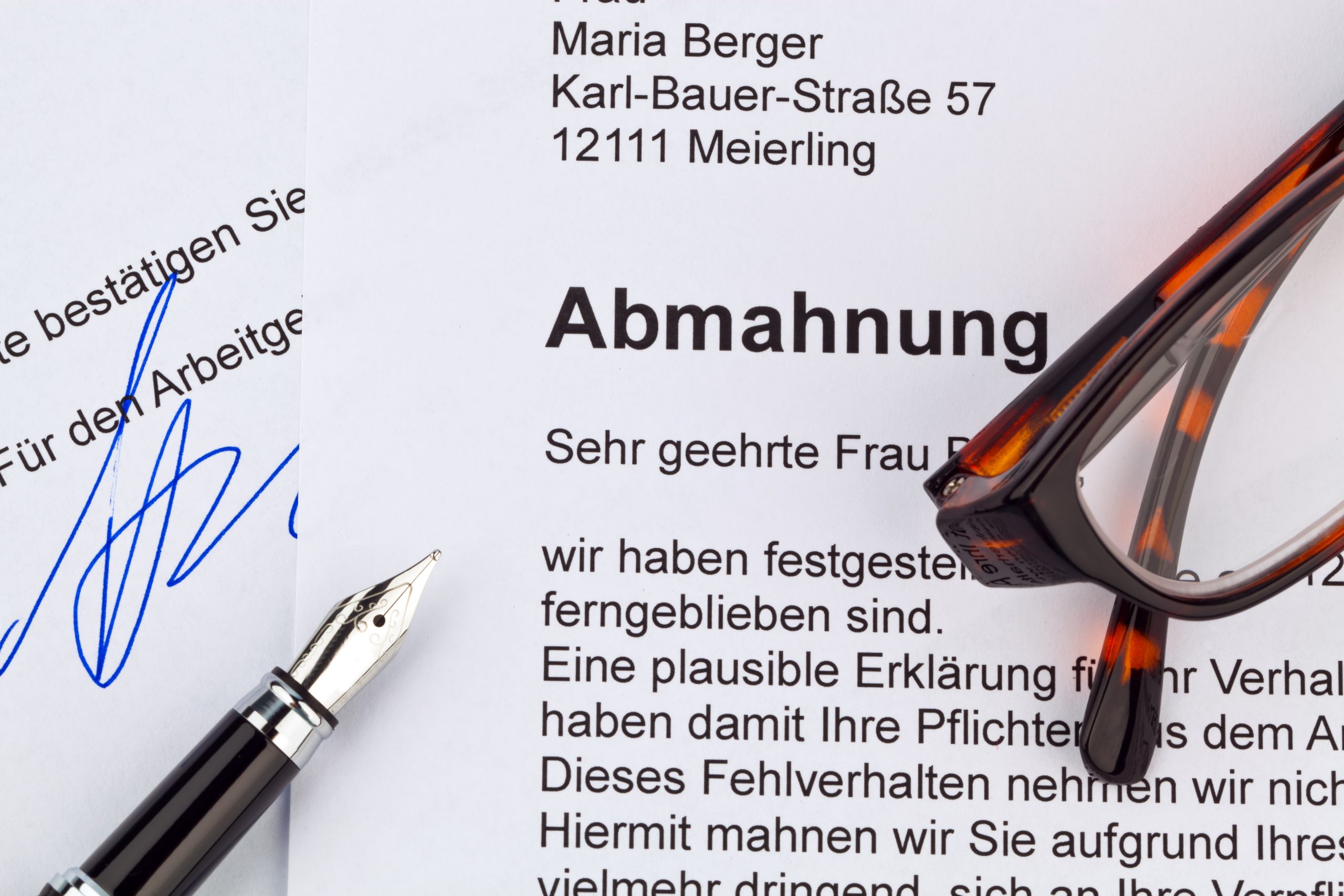
Why you shouldn't simply sign the cease and desist declaration
The cease-and-desist declaration, typically included with a warning letter, is drafted by the sender. This means it is worded as broadly as possible to offer the sender maximum protection. Anyone who signs this declaration essentially acknowledges the accusation and commits to refraining from the objectionable behavior in the future. In the event of a subsequent breach of this commitment, a contractual penalty is usually stipulated – often amounting to several thousand to tens of thousands of euros.
The real problem is that the declaration drafted by the party issuing the warning almost always goes further than the actual accusation. Anyone who signs without carefully reviewing the text may be committing themselves to more than necessary – and thus restricting future courses of action for the company that would otherwise be unproblematic.
The better alternative: a modified cease-and-desist declaration. This is a version drafted by the recipient of the warning letter, limiting the scope of obligations to the actual objectionable conduct. It sends the signal that you take the problem seriously – without committing to more than necessary. Whether the sender of the warning letter accepts this depends on the individual case. Sometimes, rejecting the warning letter entirely is the right course of action. The best option depends on the circumstances.
Don't sign anything until you know what you're giving up.
How we will proceed for you
When you submit a cease-and-desist letter to us, we begin the review immediately. We examine three questions: First, whether the alleged violation actually occurred. Second, whether the party issuing the cease-and-desist letter is even authorized to do so. And third, whether the scope of the demand corresponds to what can actually be objected to.
Based on this assessment, we will work with you to develop the right response: a rejection, a modified statement, or – if the accusation is indeed justified – a strategy to mitigate damages. If the matter proceeds to litigation, we will represent you.
And in parallel: We help you to rectify the underlying deficiency, thus reducing the risk of future warnings. Because a warning that has been successfully defended against, but where the real problem remains, is merely a temporary warning.
Received a warning letter? Call us before the deadline expires.
FAQs – Frequently Asked Questions about AI Warning Letters
Rogert & Ulbrich – Your lawyers for AI-related cease-and-desist letters
In the area of AI-related cease-and-desist letters, you need someone who truly understands both competition law and the AI Regulation. Rogert & Ulbrich combines both. Dr. Marco Rogert and Tobias Ulbrich react quickly, think strategically, and consistently represent your interests – both out of court and in court.
We will review the warning letter, develop your response, and ensure the underlying problem is resolved. Get in touch and protect your rights.

Professional advice & support
We offer you a professional and comprehensive initial consultation regarding AI regulations. Take advantage of this opportunity and avoid mistakes.