Transport law attorney for IJmuiden
hire a specialist lawyer now
Your partner in transport law for IJmuiden
Enforcing claims in the Dutch port center
Transport damage, liability dispute or contractual conflict with a Dutch Freight forwarder or carrier? Legal disputes in international freight transport via IJmuiden are complex – Dutch law, European regulations, and international conventions are all intertwined. Rogert & Ulbrich advise We represent companies in transport law matters in IJmuiden: nationally, European and internationally, both out of court and in court. We enforce your claims.
Enforce legal claims in just 3 steps
Simple, convenient & fast – we enforce your rights.
commissioning
Give us your mandate easily and conveniently via online form from home.
1lawsuit & trial
We will take care of all the remaining steps for you. Sit back and relax.
2Success
We will successfully enforce your claim and you can enjoy the success immediately.
3IJmuiden as an industrial port
Why transport law plays a special role here
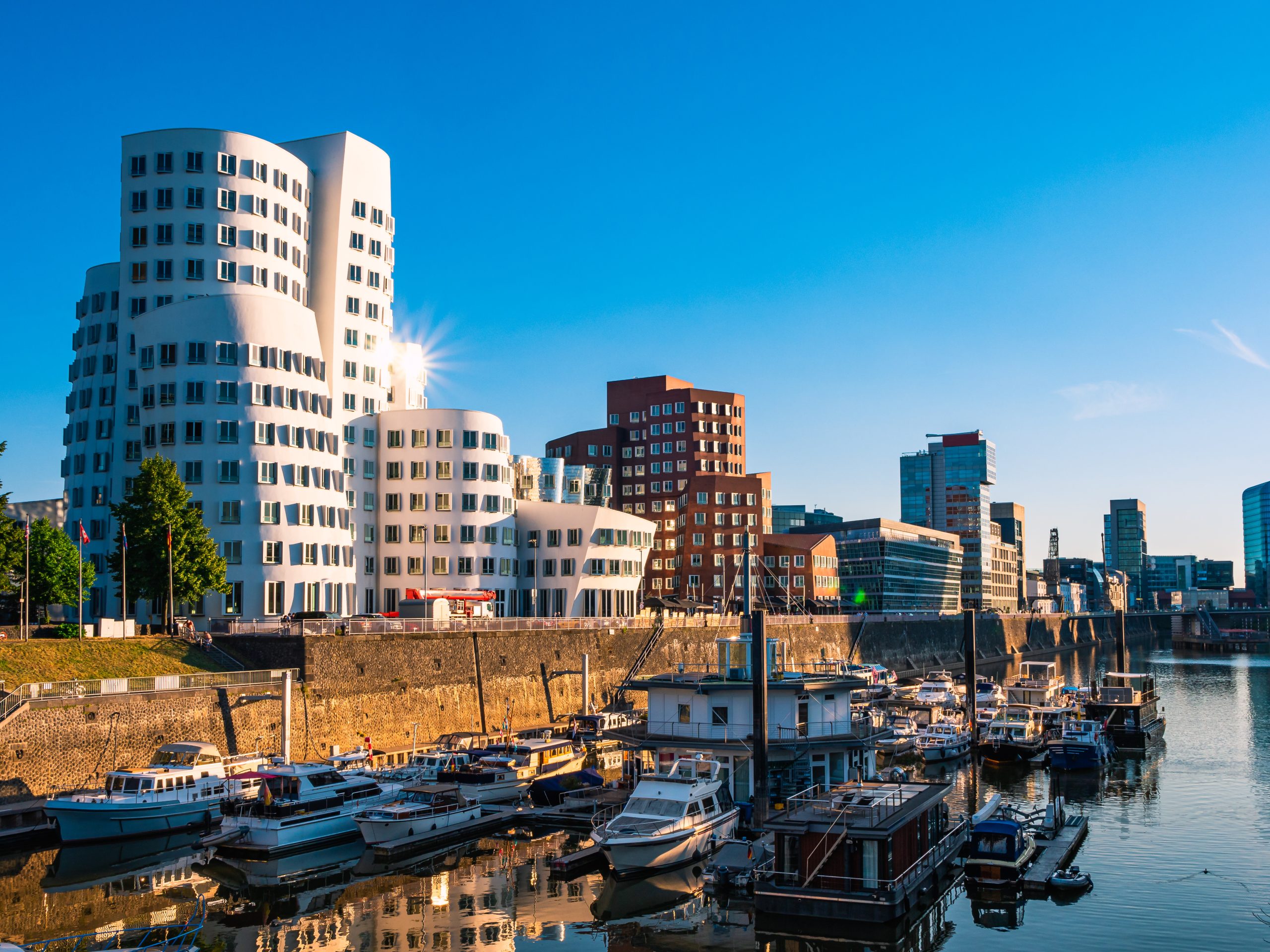
IJmuiden lies at the western end of the North Sea Canal, directly on the North Sea, and is thus the gateway to the Amsterdam port area. The town is primarily known as the location of Tata Steel Netherlands – one of the largest steelworks in Europe. A dense industrial infrastructure has developed around this plant over decades: coke oven products, ores, coal, pig iron, and steel products are transported here in large quantities by ship, barge, and truck. In addition, there is a significant fishing port and regular freight handling via the IJmuiden lock system, which controls access between the North Sea and the North Sea Canal.
For companies that ship or receive goods via IJmuiden, this has a concrete consequence: The goods profile is more specialized than in Amsterdam or Rotterdam, and the typical transport routes – seagoing vessel through the lock, inland waterway vessel on the North Sea Canal, truck to the hinterland – bring with them specific liability issues. Depending on which section of the route a loss occurs, different international conventions, Dutch law, or a combination of both apply.
Dutch law and what it means for you
The Netherlands has its own independent commercial and transport law. While similar to German law in some respects, it differs in crucial details – for example, regarding deadlines, the validity of general terms and conditions, and who bears the burden of proof in the event of damage. German companies unfamiliar with Dutch regulations risk losing legitimate claims, even if the case would otherwise be winnable.
Why transport via IJmuiden are so legally complex
Many transports passing through IJmuiden combine several routes: A seagoing vessel passes through the IJmuiden lock, navigates the North Sea Canal, and unloads at the industrial or fishing quay – or an inland vessel takes on the cargo and continues on to Amsterdam and the European inland waterway network. Trucks transport steel, ores, and industrial goods directly from the factory to the hinterland. Each of these routes has its own liability rules. If damage occurs during such a combined transport, the first question is not "Who is liable?" but rather: "Which law applies here?" And this question is anything but easy to answer.
Have you experienced transport damage related to IJmuiden and don't know what to do? Have the legal situation reviewed early – deadlines are fast approaching.
We will take care of your case – quickly & with commitment.
What legal rules apply to transport via IJmuiden?
That depends on the route the goods have taken. Dutch transport law distinguishes between five areas:
- Multimodal transport: When several transport routes are combined, special liability issues arise – especially when it is not clear where on the route the damage occurred.
- Road transport: Cross-border truck transports between Germany and the Netherlands are subject to the CMR Convention – an international treaty with its own liability rules and deadlines.
- Sea freight: Goods transported by ship through the port of IJmuiden are subject to the Hague-Visby Rules and Dutch maritime law.
- Inland navigation: Transport on the North Sea Canal between IJmuiden and Amsterdam is governed by the CMNI Convention and supplementary Dutch law. The North Sea Canal is the main link between the seaport of IJmuiden and the European inland waterway network.
- Air freight: IJmuiden does not have a cargo airport. Air freight shipments to and from IJmuiden are usually handled via Amsterdam Airport Schiphol, which is only about 20 kilometers away; the Montreal Convention applies there.
Not sure which rules apply to your transport? We'll clarify that for you.
The Fenex terms and conditions
What Dutch freight forwarders include in their contracts
Almost all major Dutch freight forwarders operate on the basis of the so-called Fenex terms and conditions – these are their standard terms and conditions. These terms and conditions significantly limit the freight forwarder's liability and set short deadlines for claims. Many German clients are unaware of these terms and conditions and only realize what they have tacitly accepted when a claim arises.
However, this doesn't mean they're useless. Firstly, the Fenex terms and conditions must have been effectively incorporated into the contract. Secondly, there are situations where they don't apply – for example, if the freight forwarder can be proven to have committed gross negligence. In Germany, the corresponding terms and conditions are known as the ADSp; both sets of regulations have similarities but differ in important details.
Do you have a freight forwarding contract with a Dutch partner and are facing a claim? Have it checked whether the Fenex terms and conditions are even valid in your case.
The CMR Convention: What it means when your goods are transported by truck via IJmuiden
For most truck transports between Germany and the Netherlands, the CMR Convention automatically applies – an international treaty to which almost all European states have acceded. It uniformly defines the liability of freight forwarders and carriers, how damages must be reported, and how long you have to file claims.
What the CMR says about the liability of the freight forwarder
The CMR Convention limits how much a freight forwarder has to pay in the event of damage. The limit is 8.33 Special Drawing Rights per kilogram of damaged or lost goods – an international currency unit that is roughly equivalent to 10 to 12 euros per kilogram. While this may sound like a lot, it often isn't: those transporting high-value electronics, machinery, or pharmaceutical products may only receive a small portion of the actual value of the goods under this regulation.
You will only receive full compensation for the damage if you can prove that the freight forwarder caused the damage through gross negligence or intent – which the CMR refers to as "fault equivalent to intent". This is Article 29 of the CMR, which we will discuss in the next section.
When the CMR liability cap falls: Art. 29 CMR
There is one exception where the CMR liability limits are completely waived: if the freight forwarder or their employees acted recklessly and knew – or should have known – that their actions were highly likely to cause damage. In this case, the freight forwarder is liable without limitation, i.e., for the full value of the goods.
Typical examples: The driver switches off the refrigeration in a refrigerated vehicle, even though he knows it is carrying temperature-sensitive goods. Or the load is not secured despite explicit instructions and shifts during transport. Or an obviously defective vehicle is used nonetheless. As the injured party, you must provide proof of this serious negligence – this is challenging, but possible. Rogert & Ulbrich has experience in developing such arguments and enforcing them in court.
Further information on qualified fault under Article 29 CMR can be found here. here.
Deadlines in transport law: Those who act too late lose their claim.
The CMR Convention sets short deadlines, and anyone who misses them loses their claim – no matter how obvious the damage is. Visible damage must be reported immediately upon delivery of the goods. For damage that only becomes apparent upon unpacking, you have seven days. For damage caused by delay, you also have seven days from the day the goods arrived at the recipient's address. The limitation period is generally one year – three years in cases of proven gross negligence.
Damage to your truck during transport via IJmuiden? Every day counts. Contact us now.
Liability and compensation for transport damage in IJmuiden
Damage in transit is annoying. It's even more annoying when the shipping company is obligated to pay but doesn't – because the documentation is missing, the deadline was missed, or the wrong party was contacted. These three problems can be avoided if you know what's important.
Secure evidence before accepting the goods
The most important thing after a damage incident: Document the damage before processing or unpacking anything further. Take photos of the condition of the packaging, a written damage report on the CMR consignment note or delivery slip, and ideally, an expert's report. Those who fail to do this often find themselves at a disadvantage later – the freight forwarder will claim the damage occurred after delivery.
Who is liable: the freight forwarder or the carrier?
In practice, a common dispute arises: The freight forwarder claims to have acted only as an intermediary and not to have transported the goods themselves. The actual carrier is difficult to reach or located abroad. However, there are situations in which a freight forwarder is legally treated as a carrier – namely, when they themselves undertook the transport, even if they used subcontractors. This distinction is a classic point of contention, one that Rogert & Ulbrich is familiar with and knows how to use to your advantage.
Hidden transport damage: When the damage only becomes visible later
Particularly problematic are so-called concealed transport damages: The goods appear fine upon delivery, but damage is discovered upon unpacking or switching on the machine. In such cases, specific deadlines apply for reporting the damage. Those who miss these deadlines forfeit their claim – even if it is clear that the damage must have occurred during transport.
Contract drafting with Dutch freight forwarders
What you should know beforehand
Anyone who regularly transports goods via IJmuiden should not only deal with damage claims, but also with the underlying transport contract. Many problems arise not during transport, but beforehand – namely, when an insufficiently reviewed freight forwarding contract is signed.
Jurisdiction: Where will legal action be taken in case of a dispute?
If the contract stipulates that in the event of a dispute, only a court in IJmuiden has jurisdiction, you will have to sue in the Netherlands if necessary. This means: a Dutch lawyer, Dutch proceedings, possibly in Dutch – and all at your own expense. Such clauses are common and can often be avoided or challenged, but only if you are aware of them before signing.
Fenex versus ADSp: When two worlds of terms and conditions collide
In Germany, freight forwarders typically operate under the ADSp – the German Freight Forwarders' Standard Terms and Conditions. In the Netherlands, the Fenex Terms and Conditions apply. Both limit liability, but do so in different ways. If a German company enters into a contract with a Dutch freight forwarder without clarifying which terms and conditions should apply, a bitter dispute can arise in the event of damage as to which conditions are actually applicable. Rogert & Ulbrich is familiar with both sets of regulations and helps to avoid such conflicts from the outset.
Have you received a new contract with a Dutch freight forwarder? Have it reviewed before you sign.
Demurrage and Detention
If the container gets stuck at the port
In freight traffic via IJmuiden, demurrage charges and waiting fees appear in a slightly different form than in major container ports. Bulk carriers waiting to enter the IJmuiden lock or to be unloaded at the industrial or steelworks quay can incur significant demurrage charges. Who bears these costs—shipowner, freight forwarder, or consignee—depends on the contract and the specific circumstances of the delay. Rogert & Ulbrich will review whether any such claims against you are justified and defend you against unjustified claims.
Why demurrage calculations are often wrong
The recipient is informed too late about the container's arrival. The terminal itself caused delays. The grace periods in the contract were calculated incorrectly. Or the invoice refers to periods during which the container was no longer under your control. All of these are reasons why demurrage claims are legally contestable. Rogert & Ulbrich will examine whether and to what extent such an invoice against you is justified.
Received a demurrage bill? Do not pay until your eligibility has been verified.
Multimodal transport via IJmuiden
If the damage occurred anywhere along the route
Many goods passing through IJmuiden are transported via several routes: A seagoing vessel passes through the IJmuiden lock and unloads ores, coal, or steel products at the industrial quay. From there, inland vessels take over the onward journey on the North Sea Canal towards Amsterdam and into the European inland waterway network – or trucks transport the goods directly from the factory to the hinterland. Such combined transport is called multimodal. It is practical – but it creates a legal challenge that is often underestimated in practice.
The problem is this: if damage occurs during such transport and no one can say exactly where – whether on the ship, in the port, or on the truck – then it's unclear which regulations apply. And that's not irrelevant: depending on the stage of transport, CMR law, maritime law, or inland waterway law could be applicable, each with its own liability limits and time limits.
For precisely this situation – when the location of the damage cannot be clearly determined – there are special legal rules. Put simply, they state: If it is clear on which section of the road the damage most likely occurred, the law of that section applies. If this is also unclear, fallback regulations apply, designed to achieve the most favorable outcome for the injured party. Which rule applies in your case and how to use it to your advantage is a question that specialized lawyers can answer.
Damage on a section of road with multiple traffic routes? The sooner we examine the transport chain, the better the starting position.
FAQs – Frequently Asked Questions about Transport Law for IJmuiden
Your transport law attorneys in IJmuiden
We represent your interests out of court in negotiations with carriers, freight forwarders, and insurers, as well as before German and European courts. Whether it's a liability dispute under the CMR Convention, a demurrage claim in maritime freight, an analysis of Fenex terms and conditions, or contract drafting for the Dutch market: we understand the interfaces between German, Dutch, and international regulations. Rogert & Ulbrich works in multiple languages and has many years of experience handling complex transport matters related to IJmuiden and the Dutch ports.
Is your company facing a transport law case related to IJmuiden or the Netherlands? Get in touch and secure your rights.

Professional advice & support
We offer you professional and comprehensive initial advice in the area of transport and forwarding law. Take your chance and avoid mistakes.