Data breaches at Tesla: Return option due to unauthorized video recordings
hire a lawyer now
Massive data protection problems at Tesla
During the emissions scandal, many affected customers were able to return their vehicles, but this was often not financially advantageous. At Tesla, the situation is often different. The key to the return lies in the company's serious data protection violations. A guest article.
Tesla vehicles continuously record their surroundings, whether in so-called "Sentry Mode," when using the dashcam, or to support driver assistance systems. Often, pedestrian faces, license plate numbers, and entire movement profiles are stored without the consent of the affected parties – sometimes locally, sometimes in the cloud. According to a Reuters report, Tesla employees even had access to private camera recordings and shared them internally.
Enforce legal claims in just 3 steps
Simple, convenient & fast – we enforce your rights.
commissioning
Give us your mandate easily and conveniently via online form from home.
1lawsuit & trial
We will take care of all the remaining steps for you. Sit back and relax.
2Success
We will successfully enforce your claim and you can enjoy the success immediately.
3Tesla cars record everything: privacy concerns and legal risks
As early as 2020, the Conference of the Independent Data Protection Supervisory Authorities of the Federal and State Governments (DSK) expressed serious concerns. The Berlin Data Protection Commissioner also found that the operation of Sentinel Mode in public areas poses data protection concerns. Unlike conventional dashcams, which only activate in the event of an accident, Tesla vehicles film continuously for hours.
Owners as responsible parties: Data protection violations through the use of Tesla vehicles
The legal challenge lies in the fact that Tesla itself, but rather the vehicle owner, is responsible for the data protection violations. The owner is considered a "violator" under data protection law – the person who enables the unauthorized processing of data by making the vehicle available (analogous to Sections 1004 and 823 of the German Civil Code). According to prevailing case law, the owner commits an administrative offense under Section 83 of the German Federal Data Protection Act (BDSG) with each use of the recording systems.
No software update in sight: Data protection deficiency remains unsolved
To date, Tesla has not offered a privacy-compliant solution that simultaneously maintains the vehicle's advertised features. Anyone who deactivates Sentinel Mode or the dashcam loses essential safety and convenience features. This situation constitutes a legal defect (Section 434 of the German Civil Code), as the vehicle does not meet the legal requirements.
Withdrawal from the purchase contract: Return is worthwhile thanks to lower compensation for use
Withdrawal from the purchase contract results in a reversal: The buyer returns the vehicle and receives the purchase price less compensation for use. A similar procedure was already used in the emissions scandal. The compensation for use is based on the distance driven. Assuming a service life of 300,000 km, the following calculation example results:
Example calculation:
Purchase price: 60,000 euros
Distance traveled: 30,000 km
60,000 euros x (30,000 km / 300,000 km) = 6,000 euros compensation for use
Refund: 54,000 euros
Especially with Tesla, whose models have recently suffered a significant loss in value due to various factors, a return can be financially worthwhile.
Tort law allows for additional rescission claims
In addition to sales law, tort law also plays a role: Section 823 (2) of the German Civil Code (BGB) provides for claims for damages in the event of a violation of a protective law – this includes the GDPR. The camera software for Tesla vehicles was deliberately developed and marketed in violation of data protection law, although the legal situation was known. Section 826 of the German Civil Code (BGB) goes even further: In the event of intentional, immoral damage, a separate tortious claim for rescission arises.
Not just Tesla: Data protection problems at many car manufacturers
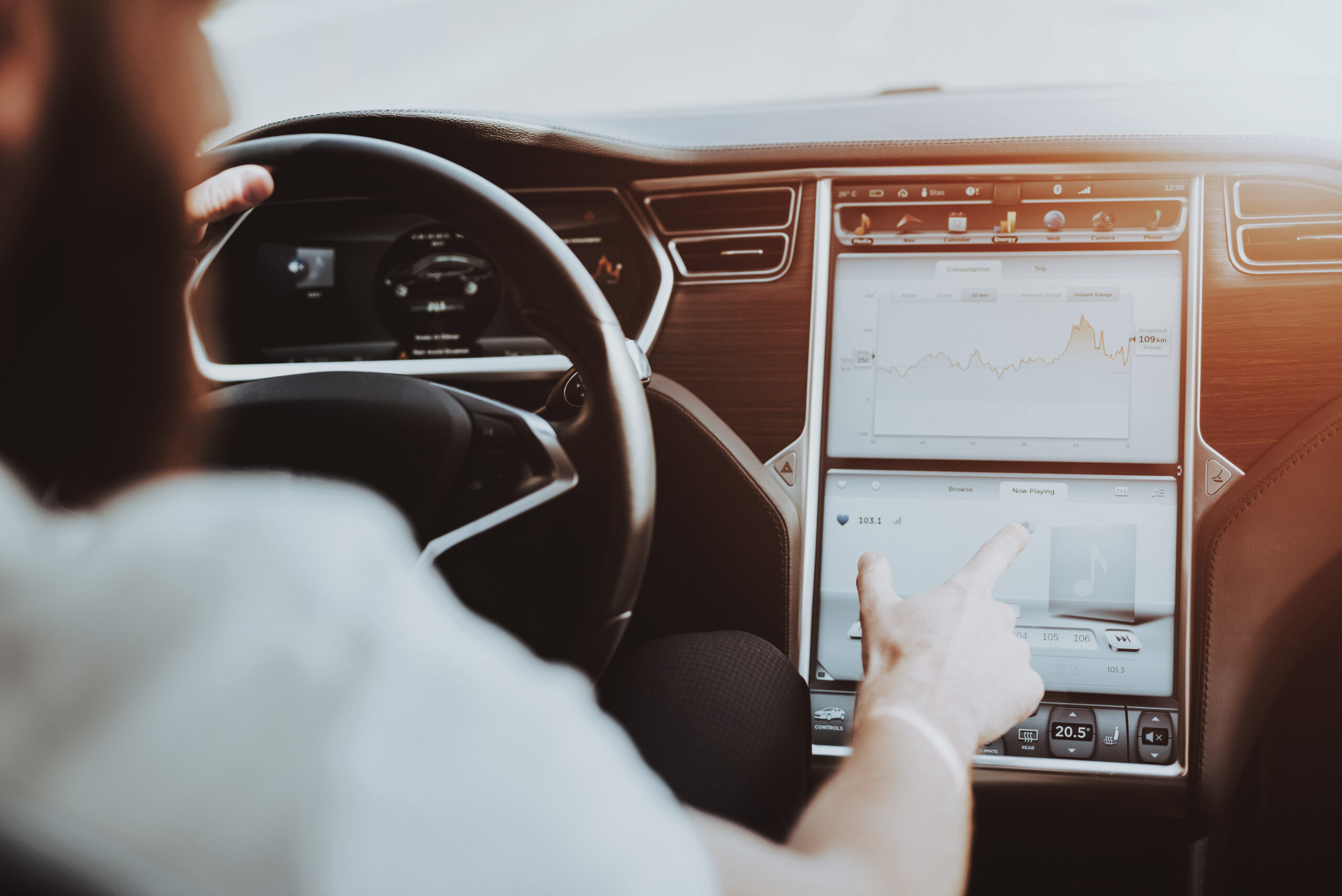
While Tesla is the most well-known case, other manufacturers are also increasingly integrating systems for continuous environmental monitoring. However, the GDPR does not differentiate between manufacturers—the decisive factor is whether personal data is processed and shared.
We help you
Data protection is not a minor aspect of innovation, but a fundamental right. Tesla's camera technology systematically violates this right and poses a legal risk for owners that goes far beyond potential fines. The vehicles are legally deficient, and withdrawal appears not only possible but also economically advantageous in many cases. Rely on our expertise to act in compliance with data protection regulations and to ensure the use of your Tesla technology complies with legal requirements.

Professional advice & support
We offer you professional and comprehensive initial consultations in the automotive sector. Seize your opportunity and avoid mistakes.